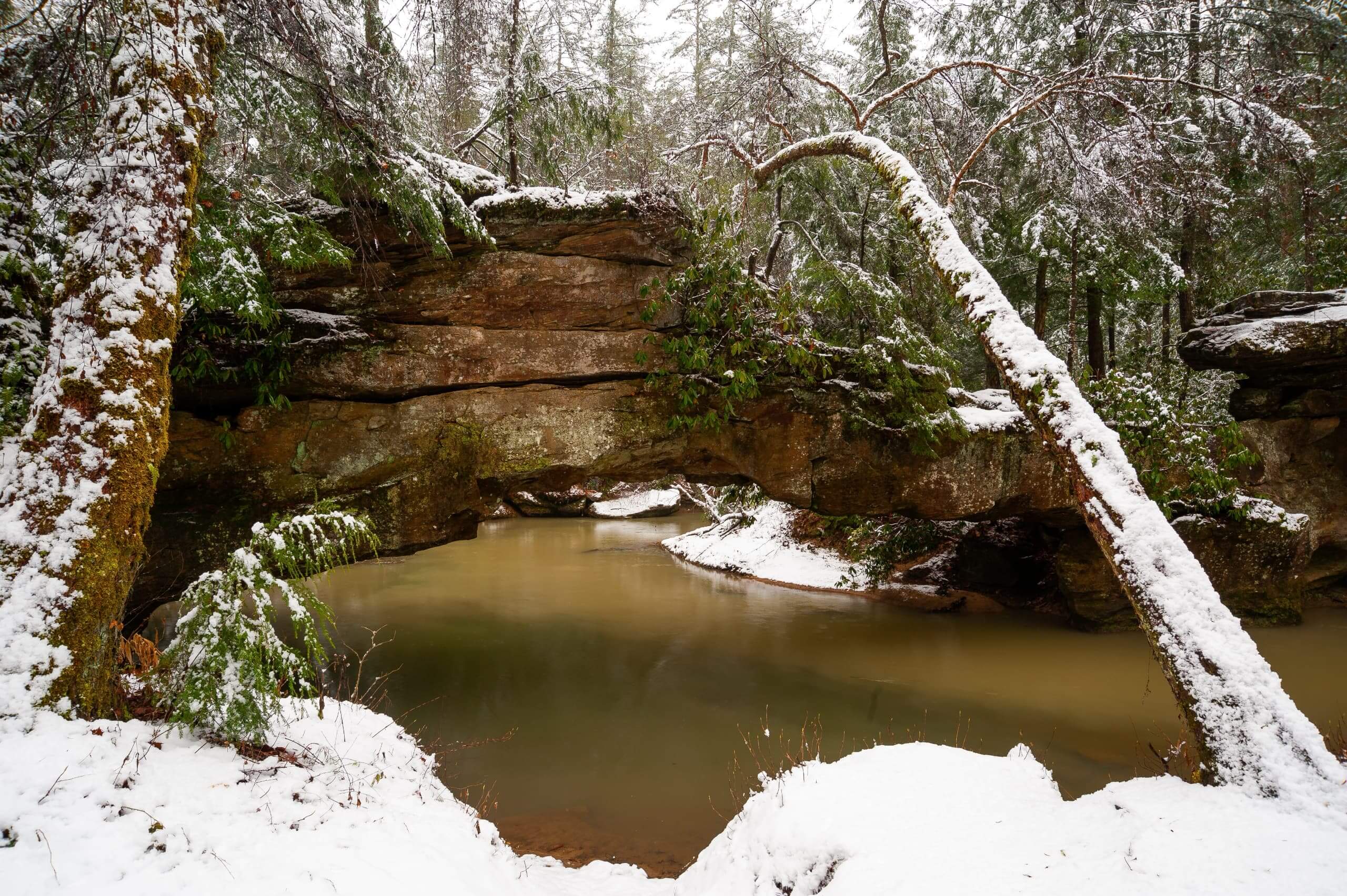
Winter at Red River Gorge is a well-kept secret. While most visitors flock to eastern Kentucky during October's peak foliage season, the Gorge transforms into something equally stunning — and far less crowded — once the temperatures drop. Frozen waterfalls, snow-dusted sandstone cliffs, and empty trails reward those willing to bundle up and make the drive. But a winter trip requires a bit more planning than a summer weekend getaway. Here's what you need to know before you go.
Getting there and getting around
Red River Gorge sits about an hour southeast of Lexington, Kentucky, accessed primarily via the Mountain Parkway and KY-11. The drive itself is straightforward in clear weather, but winter changes the equation. Eastern Kentucky's winding two-lane roads can become treacherous after snowfall or freezing rain, and the area's famous Nada Tunnel — a one-lane, 900-foot passage carved through solid rock — gets icy and slick when temperatures drop below freezing.
The Forest Service closes several gravel roads during winter to protect them from freeze-thaw damage. Chimney Top Road, Rock Bridge Road, and Tunnel Ridge Road (past the Gray's Arch Trailhead) are all gated off to motorized vehicles, though they remain open for hiking and biking. This means some popular trailheads that are a short drive away in summer become longer approaches on foot during winter. Plan your route before you leave and check current road conditions with the Daniel Boone National Forest ranger station.
A vehicle with good tires is essential. Four-wheel drive isn't always necessary, but it provides peace of mind on the steep, narrow roads that wind through the Gorge — especially early in the morning before any salt or sand has been applied.
What the weather actually looks like
Winter in the Gorge is cold, but it's not the brutal, sustained freeze you'd find further north. January is the coldest month, with average highs around 40°F and lows dipping to the mid-20s. February runs similar, though it tends to be the snowiest month with roughly three inches on average. Total annual snowfall in the area sits around 11–12 inches, and snow rarely sticks around for long — the ground carries snow cover only about 19 days per year.
That said, cold snaps can push temperatures into the teens or single digits, and the gorge's narrow valleys and cliff overhangs create microclimates that trap cold air. You might hike through a sunny ridgeline at 45°F and descend into a shaded hollow that feels 15 degrees colder. Wind chill along exposed cliff edges like Auxier Ridge or Chimney Top can be biting on clear days.
Rain is less frequent than in spring, but freezing rain and ice storms do occur and can shut down travel for a day or two. Check the forecast obsessively in the days leading up to your trip.
The winter scenery is genuinely spectacular
The Gorge's sandstone cliffs and natural arches are beautiful in any season, but winter strips away the dense canopy that hides them for most of the year. Rock formations that are invisible behind summer foliage suddenly reveal themselves against bare hardwood forests. You'll see arches, overhangs, and cliff bands from trail vantage points that simply don't exist when the trees are leafed out.
After a snowfall, the contrast between white-covered ridges and the warm orange-brown sandstone is extraordinary. The hemlocks and pines that line creek valleys hold snow on their branches, creating natural snow tunnels along lower trails. And when temperatures stay below freezing for several consecutive days, the waterfalls freeze into sculptural ice formations. Copperas Falls and Bell Falls are particularly stunning when frozen, producing massive ice columns and delicate "ice chandeliers" that photographers prize. Even small seeps along cliff faces create intricate ice curtains that catch morning light.
Sunrise and sunset hit differently in winter too. Lower sun angles cast long golden light across cliff faces, and the bare canopy means you can actually see the sky from the forest floor — something that's nearly impossible during summer's full leaf-out.
What's open and what's closed
Winter trims the list of available businesses and attractions, so plan accordingly.
The Sky Lift at Natural Bridge State Resort Park shuts down from roughly December through February. The state park's pool, lake kayak rentals, and miniature golf are all closed for the season. The Kentucky Reptile Zoo operates on a limited winter schedule or closes entirely — check ahead before making the drive.
Miguel's Pizza, the beloved climber institution on KY-11, typically closes for a short winter break from around mid-December through early January. When it reopens, hours may be reduced compared to the busy season. Several other small restaurants and shops in Slade and Campton operate on limited winter hours or close for the season, so don't count on finding dinner options after dark without checking ahead.
On the other hand, several key attractions stay open year-round. Gorge Underground's cave kayaking tours operate through the winter, and the constant 52°F temperature inside the flooded limestone mine actually feels warm compared to the January air outside. The Red River Gorge Zipline also runs year-round, weather permitting — they'll close for ice and high winds, but a clear 35°F day is fair game. Hemlock Lodge at Natural Bridge State Resort Park stays open and serves meals year-round, making it a reliable option for a warm lunch after a cold morning hike.
The trails themselves are always open. Daniel Boone National Forest doesn't close trails for winter, though the gated roads mentioned earlier may limit vehicle access to certain trailheads. Backcountry camping is permitted year-round with a vehicle permit.
Winter activities worth the cold
Hiking is the main draw, and winter is arguably the best season for it if you're prepared. The lack of foliage opens up long-distance views from ridgeline trails that feel completely different from their summer versions. Auxier Ridge, Indian Staircase (when open), and the Rough Trail to Gray's Arch all reward winter hikers with dramatic cliff-edge views unobstructed by leaves. Trails are quiet — you might go an entire day without seeing another person.
Rock climbing is possible on warmer winter days and the crags will be deserted. Experienced climbers who monitor weather windows can find excellent friction on dry sandstone when temperatures climb into the 40s or 50s. However, ice and seepage make many routes dangerous or unclimbable after freeze-thaw cycles, and some areas may have seasonal closures for raptor nesting that begin as early as January.
The cave kayaking at Gorge Underground is perhaps the most compelling winter-specific activity. Paddling through a lit underground mine while it's 25°F outside feels surreal, and the tours book up less in winter than during the summer rush.
For a lower-key day, the Red River Historical Museum in Clay City offers a window into the region's logging, railroad, and iron furnace history. And a winter evening in a cabin with a hot tub and a wood-burning fireplace is, for many visitors, the entire point of the trip.
Safety concerns to take seriously
Winter hiking in the Gorge carries real risks that don't exist in warmer months. The most serious is falling ice. The Wolfe County Search and Rescue Team specifically warns about ice falling from cliff overhangs and rock shelters. Freeze-thaw cycles loosen ice formations that can break free without warning, and the Gorge's many cliff-base trails and rock shelters put hikers directly in the fall zone. Wear a helmet near cliff bases and listen for cracking sounds overhead.
Trail conditions deteriorate quickly after snow or freezing rain. The Gorge's sandstone and clay trails become extremely slippery when icy, and many trails traverse narrow ledges and cliff edges where a slip has serious consequences. Microspikes or strap-on traction devices are essential gear — not optional. Trekking poles add stability on icy descents.
Shorter daylight hours compress your hiking window. Sunset arrives around 5:30 PM in December and January, and the deep valleys of the Gorge lose direct sunlight well before that. Start early, carry a headlamp regardless of your planned return time, and tell someone your intended route.
Hypothermia is a concern for anyone who gets wet or underestimates the cold. Creek crossings that are ankle-deep in summer can still be flowing in winter, and wet boots in 30°F weather create conditions for cold-related emergencies. Pack dry socks and an extra insulating layer in your pack.
Cell service in the Gorge is notoriously spotty in every season, and winter is no different. If you're hiking alone or venturing onto less-traveled trails, a personal locator beacon or satellite communicator provides a critical safety net.
It's worth it
Winter at Red River Gorge isn't for everyone, and that's exactly what makes it special. The crowds are gone, the cabin prices drop significantly, and the landscape reveals a raw, stripped-down beauty that the busy seasons obscure. If you're willing to layer up, check the forecast, pack the right gear, and accept that your dinner options might be limited to what you brought in a cooler, a winter trip to the Gorge can be one of the most memorable outdoor experiences in the eastern United States.