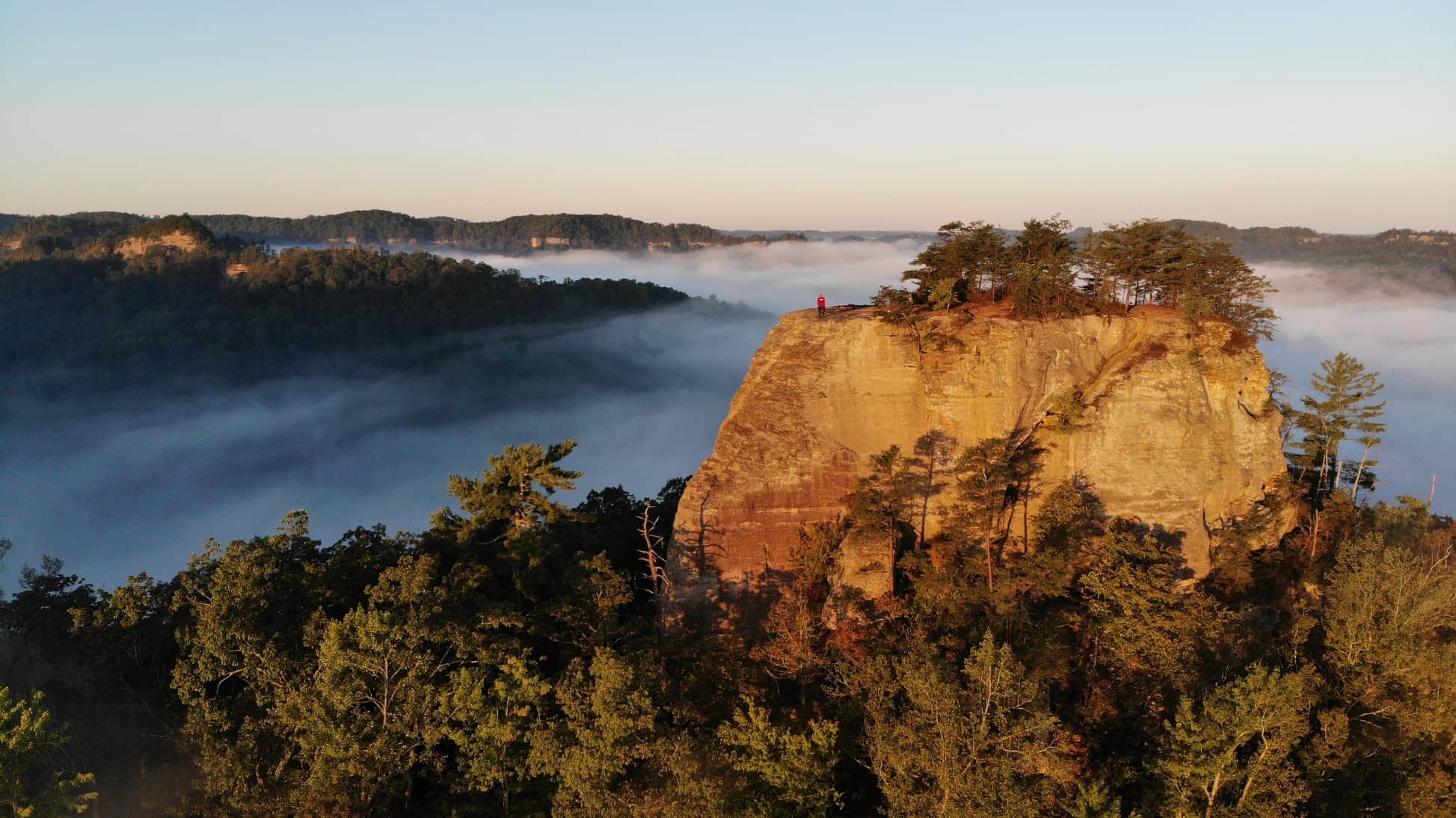
Red River Gorge is one of the most beautiful outdoor destinations in the eastern United States, but it's not the kind of place you want to show up to unprepared. Tucked into the Daniel Boone National Forest in eastern Kentucky, the Gorge draws hundreds of thousands of visitors each year for its sandstone cliffs, natural arches, world-class rock climbing, and miles of hiking trails. It's incredible — but it's also remote, rugged, and full of surprises for first-timers. Here are five things you should know before you go.
1. Cell service is unreliable at best
This is the one that catches most people off guard. Once you're inside the Gorge, cell coverage drops to near zero in many areas. Verizon tends to perform slightly better than other carriers, but even then, expect dead zones on most trails, at many trailheads, and in the valleys between ridgelines. Some cabin rental properties have Wi-Fi, but don't count on it being fast or reliable.
The practical implications are significant. You can't rely on your phone for navigation once you lose signal, so download offline maps before you arrive. AllTrails allows offline map downloads with a premium subscription, and apps like Gaia GPS and Avenza Maps work well for this area. Screenshot or print any driving directions to trailheads, cabin check-in instructions, or restaurant addresses before you leave cell range. If you're doing any serious backcountry hiking, a personal locator beacon or satellite communicator like a Garmin inReach is worth considering — especially if you're hiking solo or in winter conditions.
2. Dining options are limited and hours are unpredictable
Red River Gorge is not a resort town. There's no main street lined with restaurants, and the businesses that do exist are spread across small communities like Slade, Pine Ridge, and Campton along a handful of two-lane roads. During peak season (roughly April through October), you'll find a reasonable selection of local eateries — Miguel's Pizza, La Cabana, Sky Bridge Station, Daniel Boone Coffee Shop, Red River Rockhouse, and a handful of others. But even in season, many operate on limited hours, close early, or shut down on certain days of the week.
In winter, the situation tightens considerably. Some restaurants close entirely from December through February. Miguel's Pizza, a legendary institution in the climbing community, typically shuts down for a stretch in mid-December through early January. Hemlock Lodge at Natural Bridge State Resort Park serves meals year-round but with seasonally adjusted hours.
The safest approach is to plan on cooking most of your own meals. Stock up on groceries in Lexington or at the Walmart in Stanton before heading into the Gorge. Most cabins come with full kitchens, and grilling out on a cabin deck after a long hike is one of the great pleasures of a Gorge trip anyway.
3. The Nada Tunnel is an experience in itself — but plan for it
One of the most memorable parts of driving into Red River Gorge is passing through the Nada Tunnel on KY-77. This narrow, 900-foot-long tunnel was originally carved through solid rock in 1877 for a logging railroad, and it's now a one-lane road with no lights inside. Your headlights are all you've got, the ceiling drips water, and the rough-hewn rock walls feel inches from your mirrors.
It's a genuinely cool experience, but it creates a bottleneck. Only one direction of traffic can pass through at a time, controlled by a basic yield system at each end. On busy October weekends, the wait can stretch to several minutes in each direction. Larger vehicles — full-size trucks, SUVs towing trailers, and RVs — should use caution, as the clearance is tight. There is an alternate route into the Gorge that avoids the tunnel entirely if you'd rather skip it, but most first-time visitors consider it part of the adventure.
4. Trail conditions vary dramatically by season
Red River Gorge trails are not groomed, paved, or manicured park paths. These are rugged forest trails that cross creeks, traverse narrow cliff ledges, climb steep rock scrambles, and pass through muddy bottomlands. Trail conditions shift dramatically depending on when you visit.
Spring brings the worst mud. May is the wettest month, and the clay-heavy soil turns trails into slick, boot-sucking messes after heavy rain. Waterproof hiking boots with aggressive tread are non-negotiable in spring. Summer adds heat, humidity, and bugs — ticks, mosquitoes, and chiggers are all aggressive from June through August. Insect repellent and permethrin-treated clothing make a real difference. Fall offers the best trail conditions overall, with drier soil and cooler temperatures, but popular trails like Auxier Ridge and the Rock Bridge loop get crowded on October weekends. Winter introduces ice on exposed rock faces and cliff-edge trails, making microspikes or traction devices essential gear.
Regardless of season, the Gorge's cliff-edge trails demand respect. Several trails involve exposed sections where a misstep has serious consequences. Indian Staircase, when open, involves a steep rock scramble that is not suitable for inexperienced hikers or young children. Always check current trail conditions and closures with the Forest Service before heading out, and never hike alone on unfamiliar trails without telling someone your plan.
5. Book accommodations early for fall — and take advantage of winter pricing
If you're planning a trip during peak fall foliage season — particularly the last two weeks of October — book your cabin or campsite as far in advance as possible. Two to four months ahead is a reasonable lead time for October weekends, and the best properties sell out even earlier. This is the single busiest period in the Gorge, and demand far outstrips supply.
The flip side is that winter offers remarkable value. Cabin rental companies run aggressive promotions from December through February. You'll commonly find deals like booking two nights and getting a third free, or straight discounts of 20–40% off peak rates. Midweek winter stays offer the absolute lowest prices of the year, and last-minute bookings are almost always possible — the exact opposite of the October scramble.
For budget travelers, camping remains the cheapest option year-round. Miguel's Pizza offers primitive camping for just $3 per person per night. Backcountry camping in the Daniel Boone National Forest requires only a $5–$7 vehicle permit. Koomer Ridge Campground offers developed sites for $20–$30 in season and roughly $15 in winter. And the Hemlock Lodge at Natural Bridge State Resort Park provides a comfortable hotel-style option at $94–$139 per night without the cleaning fees that many private cabins charge.
Whatever your budget, the key is matching your expectations to the season. Come in October for the spectacle and plan to pay for it. Come in January for solitude and savings. Either way, a little planning goes a long way at Red River Gorge.